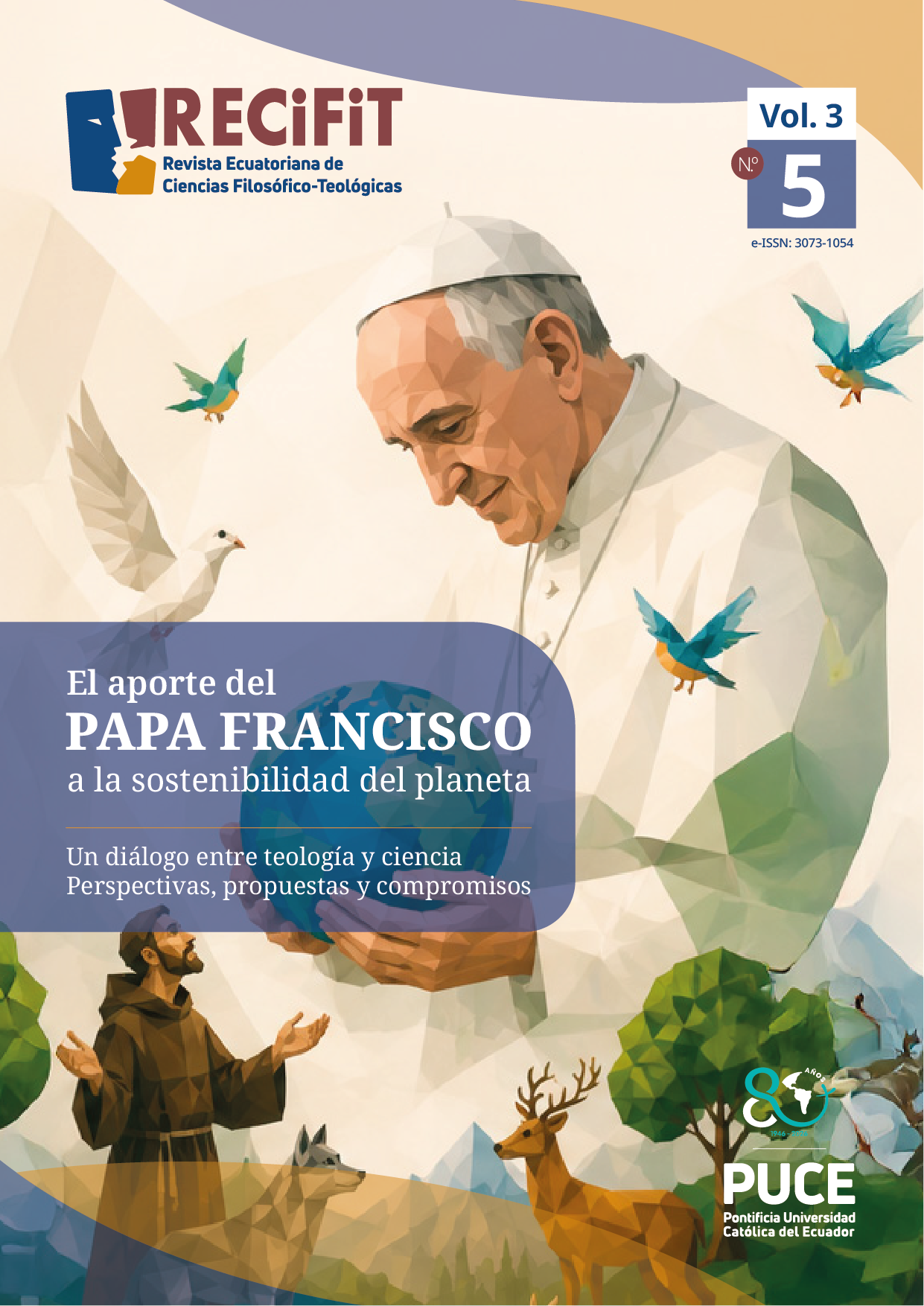
The contribution of Pope Francis to the sustainability of the planet, a dialogue between theology and science: perspectives, proposals, and commitments
Vol. 3 No. 5 (2026)
Within the framework of the celebration of the 10th anniversary of the promulgation of Pope Francis’ Encyclical Laudato Si’, and in commemoration of the 800th anniversary of Saint Francis of Assisi’s Canticle of the Creatures, the fifth call for papers promotes an integral reflection on the importance of the sustainability of the planet through proposals and commitments aimed at restoring a harmonious relationship between human beings and nature, as well as actions of reparation for the care of our Common Home, from an interdisciplinary perspective oriented toward spiritual and ecological conversion.
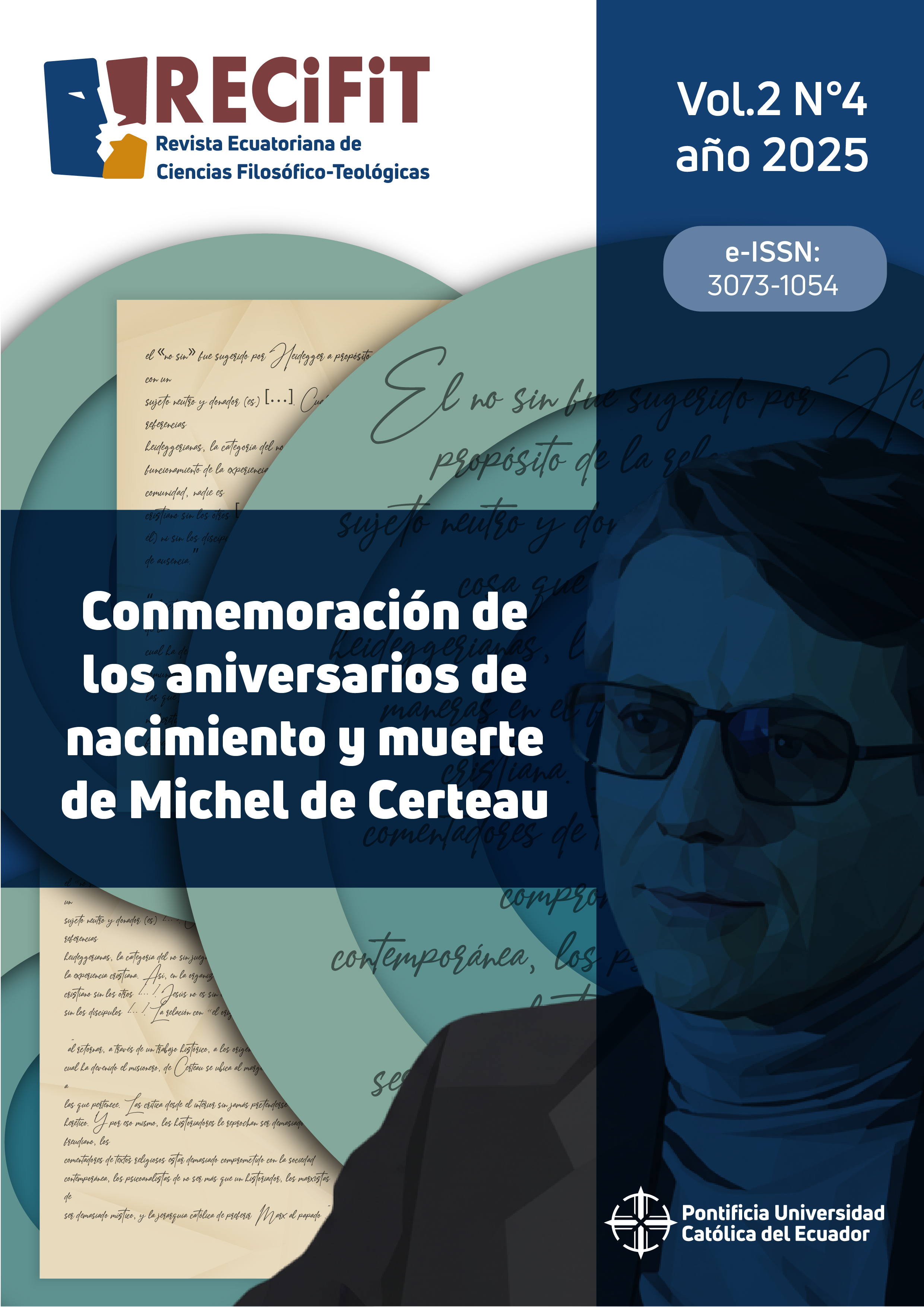
The centenary of Michel de Certeau's birth
Vol. 2 No. 4 (2025)
On the occasion of the centenary of the birth of Michel de Certeau (1925–1986), the Ecuadorian Journal of Philosophical Theological Sciences (RECiFiT) invites submissions for its 4th Issue of the December 2025 edition, dedicated to examining the various dimensions of his thought. De Certeau was a Jesuit, historian, theologian, and sociologist.
Michel de Certeau's thought is characterized by a transdisciplinary direction, in the sense that it not only establishes relationships between fields of knowledge but also transcends the boundaries between disciplines to generate new forms of understanding. This methodological approach allowed him to analyze complex contemporary aspects such as the place of the believer in modernity.
The critical engagement with Michel de Certeau's work is highly relevant for the Latin American academic sphere, as it allows for a reexamination of the modes of knowledge production, mechanisms of exclusion, and the ways subjectivity is inscribed in contexts of institutional, cultural, and political transformation. Rereading his concepts such as practice, tactic, alterity, scriptural economy, or mysticism offers theoretical tools for analyzing contemporary social processes involving tensions between normativity and experience, hegemony and dissent, official history and subaltern memories. In this sense, writing about his thought not only enables a critical recovery of his intellectual legacy but also contributes to current debates on knowledge, power, identity, and religiosity in Latin America.
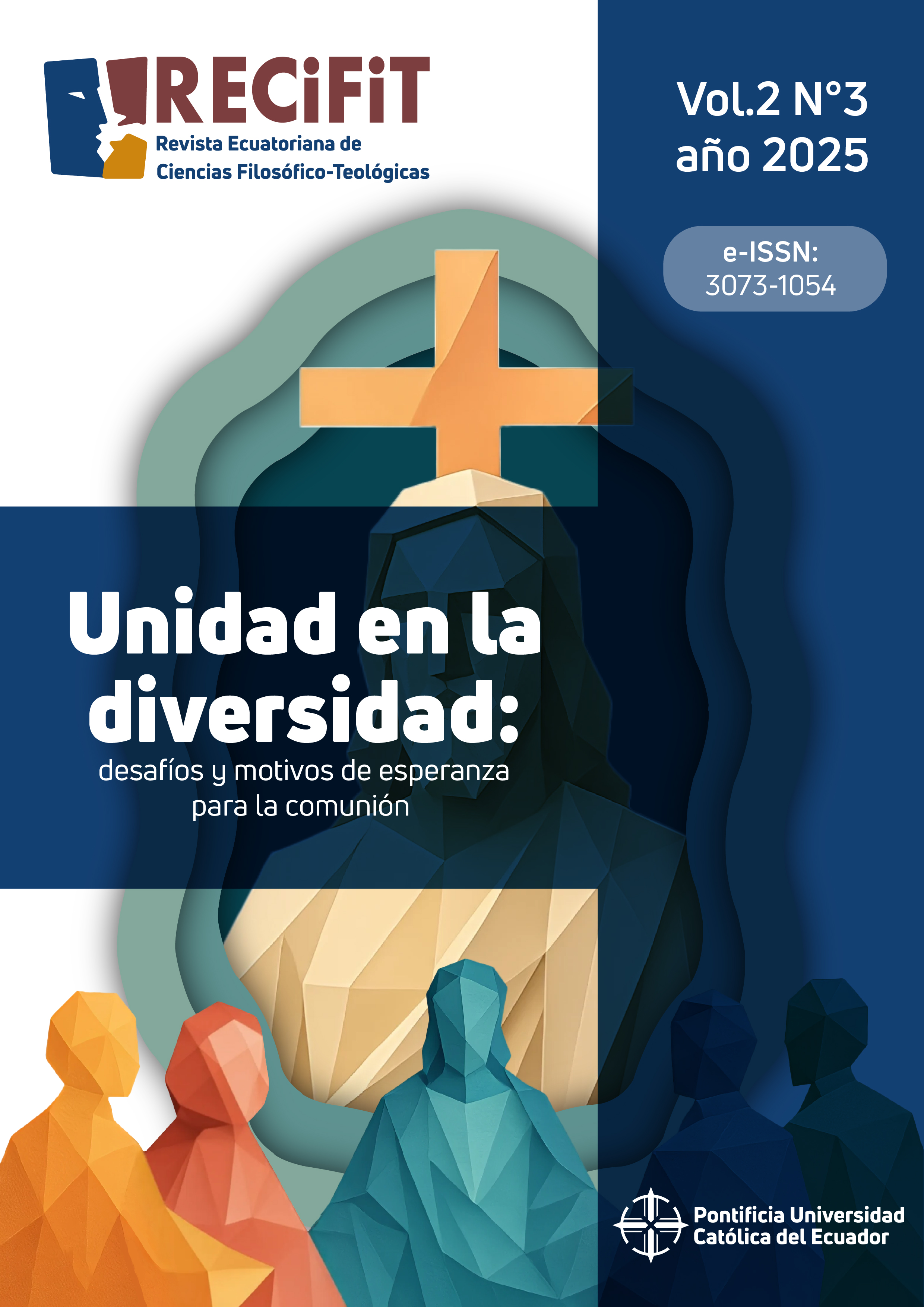
Unity in diversity: challenges and reasons for hope for communion
Vol. 2 No. 3 (2025)
As the anniversary of the Council of Nicaea is commemorated in the year 2025, it is essential to reflect on the relevance of the conciliar doctrine that defined the Trinitarian and Christological path in antiquity, along with its philosophical and historical repercussions for humanity. The Council of Nicaea (325 A.D.) not only marked a milestone in the history of Christian theology but also had a significant impact on philosophy, politics, sociology, law, and art. Etymologically, the word "Council" appears in Latin as concilium, which can be translated as "collective," that is, the group of people who participate in a common action toward a shared goal.
The drive for freedom, understood as individual self-governance, is rooted in fundamental human qualities such as silence, the ability to take distance, and the sense of transcendence. Within this freedom, the agreement to respect collective norms is necessary for any form of coexistence. Thus, philosophical transcendentals such as truth and unity offer an oxymoron that integrates opposites into a creative, enriching synthesis that generates knowledge.
This call for papers seeks to gather manuscripts that analyze the Council from interdisciplinary perspectives, covering theological, philosophical, historical, legal, and art studies implications, as well as its contemporary influence. Other research that expands the understanding of the legacy of the Council of Nicaea will also be accepted.
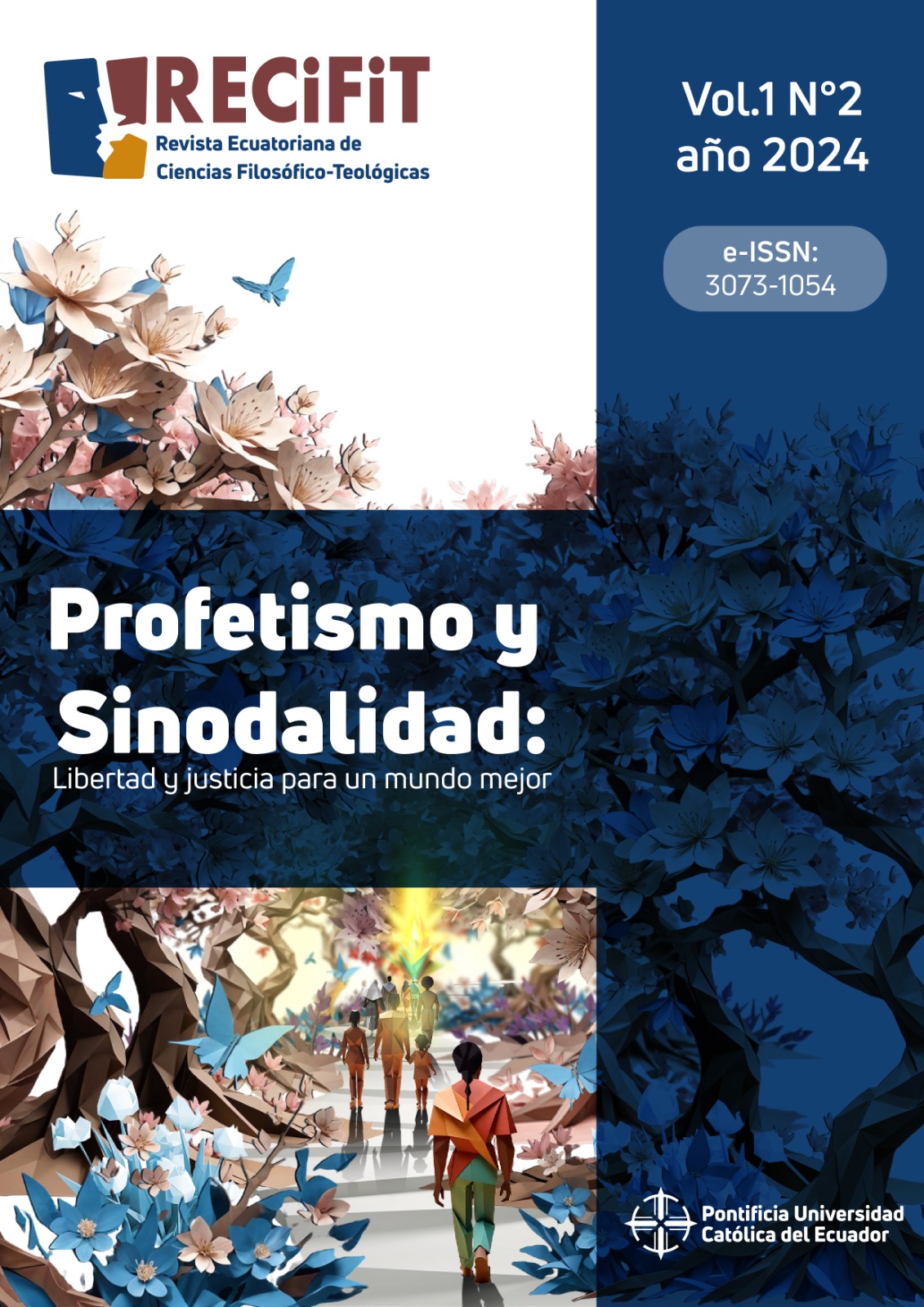
Profetismo y Sinodalidad: Libertad y justicia para un mundo mejor
Vol. 1 No. 2 (2024)
In a context of epochal change that fosters suspicion and demands coherence between discourse and action, the convocation Prophecy and Synodality: Freedom and Justice for a Better World explores how prophetic experiences of proclamation and denunciation become essential calls to live the dynamism of the Kingdom of God within a community that acts as the People of God in the "common home." From the perspective of a "Church in mission and synodal" (Francis), it proposes a reflection on the role of prophecy in the construction of a more just and free society, inviting an interdisciplinary study that encompasses philosophy, theology, and other academic approaches. This call emphasizes the prophet's mission to discern the signs of the times, promoting communion, participation, and mission under an authority conceived as service, recognizing in Christ the only Lord and in each member of the community, a brother or sister in equality and dignity.
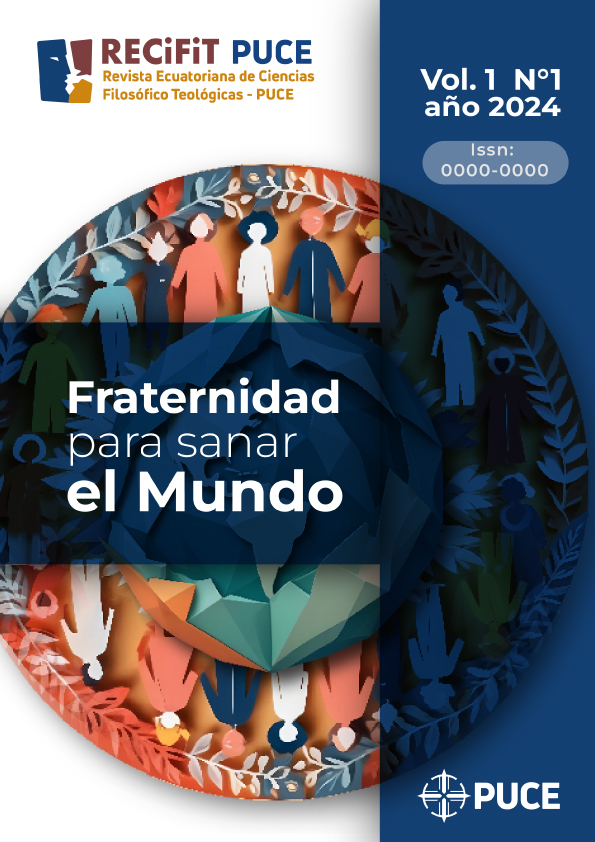
Fraternity to save world
Vol. 1 No. 1 (2024)
The "Revista Ecuatoriana de Ciencias Filosófico- Teológicas" is pleased to present the first thematic issue entitled "Fraternidad para sanar el mundo" (Fraternity to heal the world). In the context of the 53rd International Eucharistic Congress to be held in Quito-Ecuador from September 8 to 15, 2024, RECiFiT found it appropriate that the first monograph carries the theme of the congress: "Fraternity to heal the world".
A Eucharistic Congress is a religious event of the Catholic Church centered on reflecting on the importance of the meaning of the Eucharist in the life of believers and the community, in the service mission of the church.
The opening of the convocation served to address various perspectives on fraternity, autonomous responsibility and responsibility for others, prevention of violence and sexual abuse as a purpose of fraternity, analysis of encyclicals and the ministry of the laity, focusing on aspects of covenant, loyalty and support.