



Call for papers RECiFiT Núm. 6 (2027)
2026-07-26

The Revista Ecuatoriana de Ciencias Filosófico-Teológicas (RECiFiT) aims to disseminate scientific production in philosophy and theology to an academic and general audience, both nationally and internationally. Published biannually in digital format, the journal aspires to be a reference in the humanities at the local and regional level. RECIFiT covers a variety of topics including history, applied philosophy, continental and analytical philosophy, pastoral ministry, spirituality, and dogmatic and biblical studies, promoting an enriching exchange on these fields of knowledge.
2026-07-26
2024-07-16
Theme:
Contribution to the sustainability of the planet, a dialogue between theology and science: perspectives, proposals and commitments
Video:
Vídeo: Call for Papers 5ta Convocatoria
Thematic Editors:
Proposal Evaluation:
According to the editorial policies, each article will be evaluated by anonymous peers specialized in the article's research area. The originality of the proposal, the research contribution, the defined methodology, and the clarity of the hypotheses will be assessed.
Articles in Spanish or Portuguese should range between 5,500 and 7,000 words, including abstracts, keywords, development, conclusions, tables, and references. For the English version, articles should be between 5,500 and 6,800 words.
To submit articles, authors must register on the website. It is also important to review the editorial policies and submission.
Start Date: 01/01/2026
Submission Deadline for Manuscripts: 19/04/2026
Publication Date of this Issue: 24/05/2026
Open Call - 2026 Edition
Within the framework of the celebration of 10 years of the promulgation of the Encyclical Laudato Si by Pope Francis, and in commemoration of the 800 years of the Canticle of the Creatures of Saint Francis of Assisi, the 5th. call for a comprehensive reflection on the importance of sustainability of the planet, through proposals and commitments to restore the harmonious relationship between human beings and repair actions for the care of the Common House, from an interdisciplinary perspective, oriented to spiritual and ecological conversion.
Vol. 3 No. 5 (2026): The contribution of Pope Francis to the sustainability of the planet, a dialogue between theology and science: perspectives, proposals, and commitments
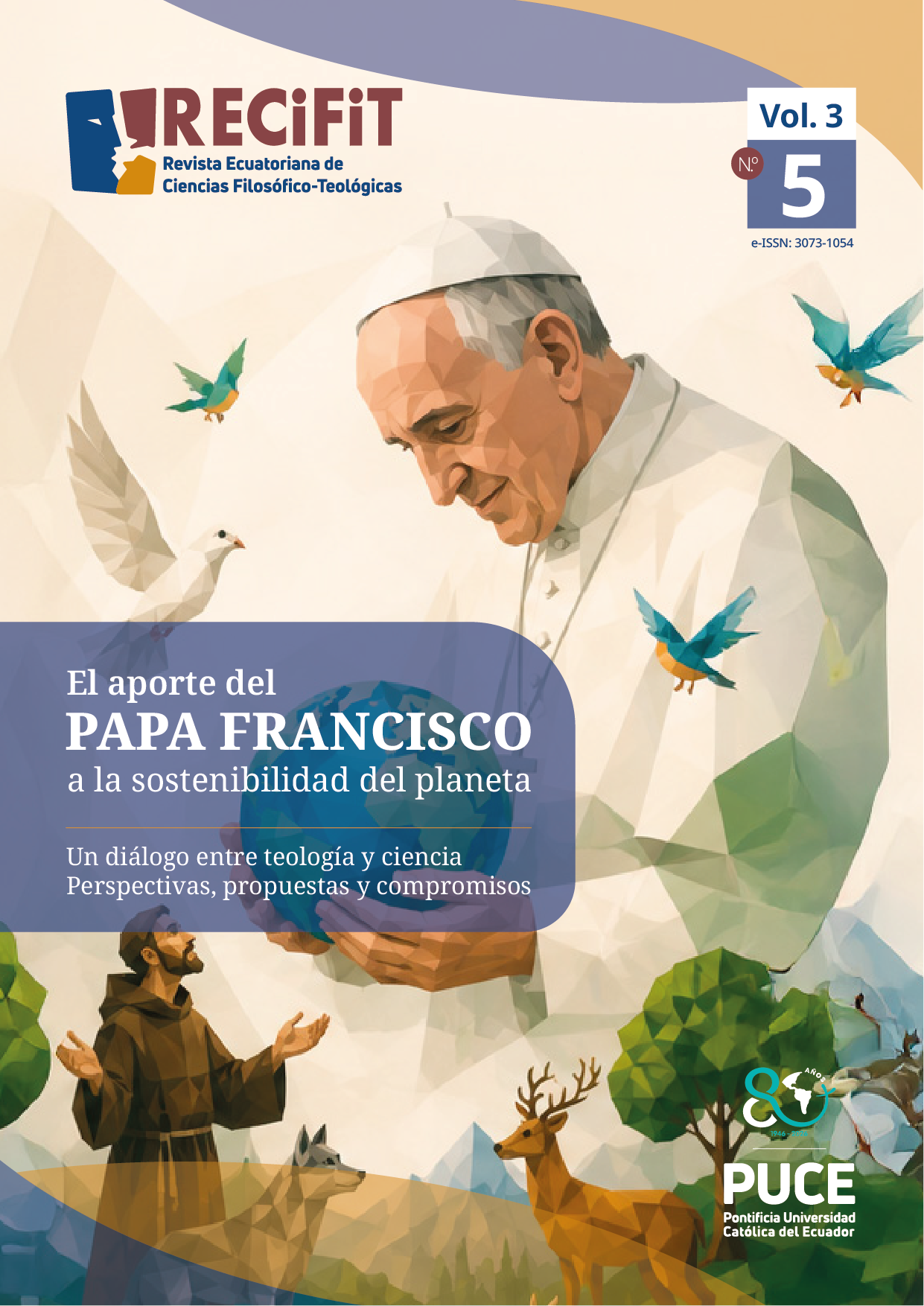
Within the framework of the celebration of the 10th anniversary of the promulgation of Pope Francis’ Encyclical Laudato Si’, and in commemoration of the 800th anniversary of Saint Francis of Assisi’s Canticle of the Creatures, the fifth call for papers promotes an integral reflection on the importance of the sustainability of the planet through proposals and commitments aimed at restoring a harmonious relationship between human beings and nature, as well as actions of reparation for the care of our Common Home, from an interdisciplinary perspective oriented toward spiritual and ecological conversion.
Published: 2026-06-30